

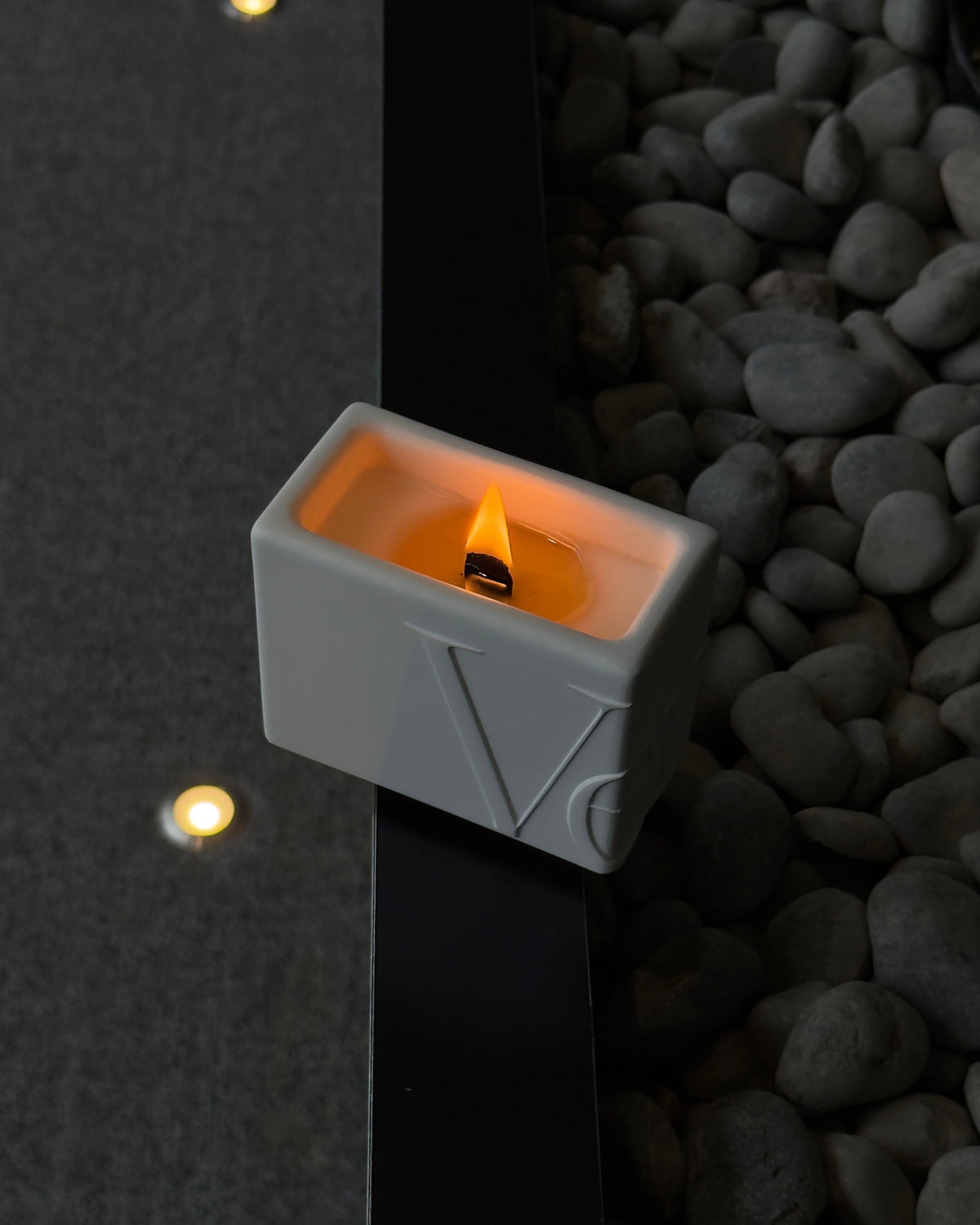
Candles for Warmth Guide: Stay Cozy in 2026
Imagine a cold winter evening in 2026, where the gentle flicker of candlelight brings comfort and subtle heat to your living space. The timeless tradition of using candles to create a warm, inviting atmosphere feels more relevant than ever.
This guide will show you how to safely and effectively use candles for warmth. Discover practical tips and creative solutions that blend classic ambiance with modern efficiency.
You will learn the science behind candle heat, the best candle types for warmth, essential safety steps, and cozy arrangement ideas. Let us help you turn every winter night into a cozy retreat with expert advice and inspiration.
The Science of Candle Warmth: How Much Heat Do Candles Really Provide?
Candles have been used for centuries to provide both light and a sense of comfort. But how effective are candles for warmth in the modern home? Understanding the science behind candle heat output reveals both the benefits and limitations of using candles for warmth. Let’s break down how much heat candles truly provide and what you need to know for safe, efficient use.
Understanding Candle Heat Output
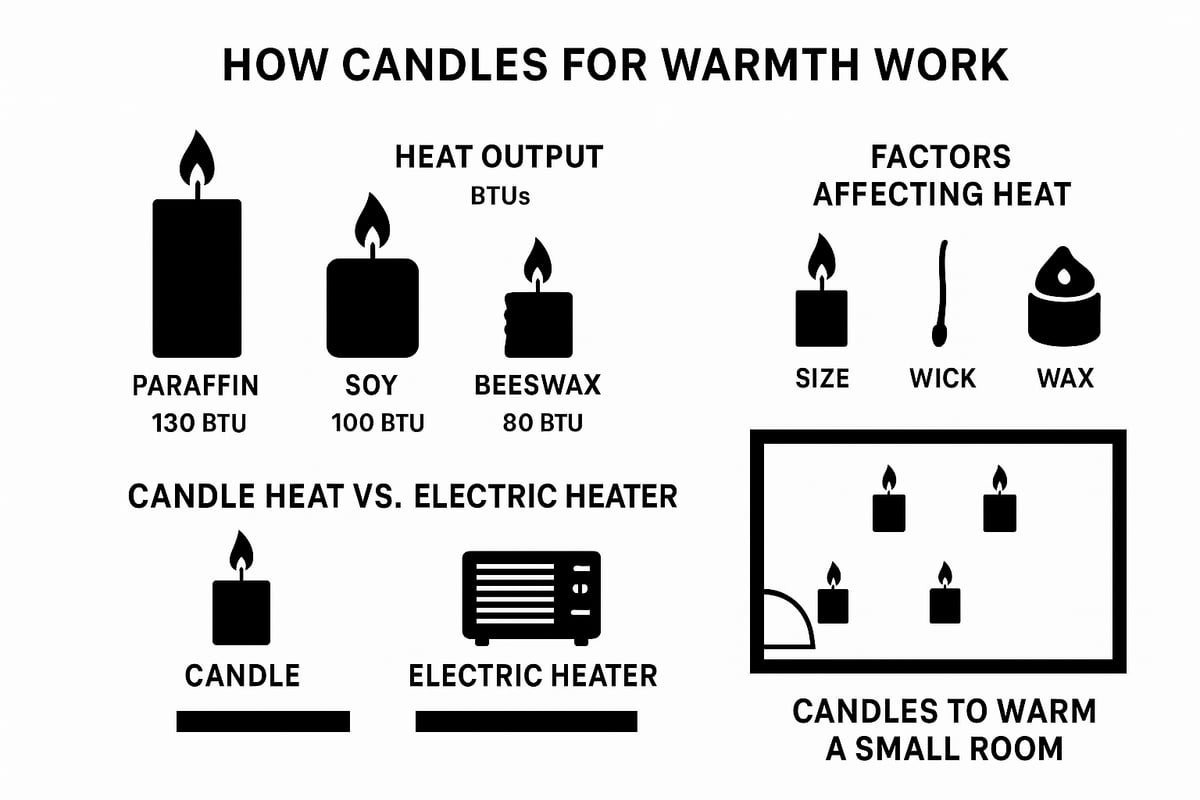
When you light candles for warmth, you are harnessing energy from the combustion of wax. As the wick burns, it draws up liquid wax, which vaporizes and reacts with oxygen to create heat and light. The type of wax—paraffin, soy, or beeswax—impacts not only the scent and burn quality, but also the heat output.
A standard paraffin candle generates roughly 80 to 100 BTUs (British Thermal Units) per hour. Beeswax candles are similar, while soy candles produce slightly less heat. To put this into perspective, a small electric space heater typically delivers between 5,000 and 10,000 BTUs per hour. Clearly, candles for warmth are much less powerful than electric heaters.
Here’s a quick comparison:
| Candle Type | Average BTUs/Hour | Burn Time (Hours) |
|---|---|---|
| Paraffin | 80-100 | 5-9 |
| Beeswax | 80-100 | 7-10 |
| Soy | 70-85 | 6-8 |
The heat produced by candles for warmth is affected by several factors:
- Size and shape: Larger pillar candles emit more heat than tealights.
- Wick type: Wooden wicks can create a broader flame and more radiant heat.
- Wax composition: Dense waxes like beeswax yield steadier, hotter flames.
In practical terms, to raise the temperature of a 100 square foot room by even a few degrees, you would need 10-12 medium-sized candles burning at once. This makes candles for warmth a cozy supplement, not a primary source. For more data on the actual heat output of different candle types, see this Candle Heat Output Analysis.
Efficiency & Limitations
While candles for warmth add a gentle touch of heat, they cannot replace central heating systems. Much of the energy produced escapes through ventilation, and safety requires that rooms remain well-ventilated to avoid carbon monoxide buildup. Case studies, such as the popular “flowerpot heater” experiments, show that while grouping candles under terracotta pots can concentrate heat, the temperature increase is minimal and must be monitored closely for fire risk.
Environmental impact is another consideration. Burning multiple candles for warmth can increase soot and carbon emissions, potentially affecting indoor air quality. Clean-burning candles with natural wax and lead-free wicks are preferable if you plan to use this method regularly.
Industry experts and competitor guides consistently caution against relying on candles for warmth as your main heat source. Instead, view them as an atmospheric boost, perfect for cozy evenings or emergencies. For example, using 10-12 candles in a small, well-ventilated room might make a noticeable difference on a chilly night, but it is not a sustainable or efficient solution for long-term heating.
Understanding the science behind candles for warmth empowers you to use them safely and effectively, blending tradition with modern awareness.
Choosing the Best Candles for Warmth and Ambiance in 2026
Choosing the right candles for warmth can transform your living space into a cozy retreat. Not all candles for warmth are created equal, so understanding the differences in wax, wick, and design is crucial. In 2026, consumers are seeking both effective heat and an inviting ambiance. This section breaks down the best options for candles for warmth, safety tips, and style trends to help you make informed choices.
Types of Candles: Which Are Most Effective?
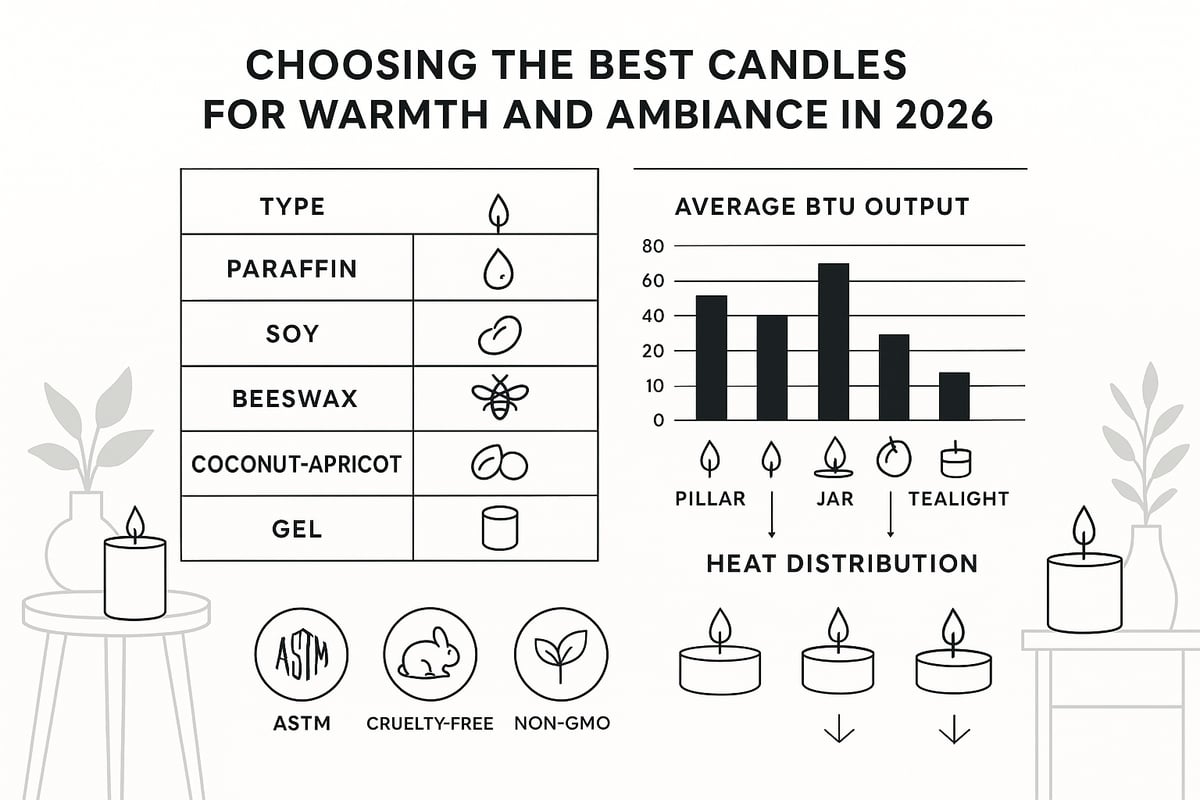
When selecting candles for warmth, the wax type plays a major role in both heat output and overall experience. Paraffin and beeswax candles for warmth tend to burn hotter than soy, coconut-apricot, or gel alternatives. Beeswax is prized for its clean burn and subtle honey scent, while paraffin remains popular for affordability.
| Wax Type | Heat Output | Burn Time | Scent Options | Eco-Friendly |
|---|---|---|---|---|
| Paraffin | High | Medium | Wide | No |
| Beeswax | High | Long | Mild | Yes |
| Soy | Moderate | Long | Wide | Yes |
| Coconut-Apricot | Moderate | Long | Subtle | Yes |
| Gel | Low | Very Long | Limited | Sometimes |
The wick also impacts performance. Cotton wicks are classic and stable, while wooden wicks create a gentle crackle and can offer broader heat distribution. For tips on optimizing wooden wick performance, see the How to Care for Wooden Wick Candles guide.
Candle size and shape matter. Pillar and jar candles for warmth provide steady, prolonged heat, while tealights are ideal for grouping. Scented candles can enhance mood, but opt for unscented if air sensitivity is a concern. In 2025-2026, best-sellers blend long burn times, robust heat, and appealing design.
Safety and Clean Ingredients
Safety is paramount when using candles for warmth, especially in homes with children or pets. Clean-burning, non-toxic candles reduce indoor air pollution and soot. Choose candles with lead-free wicks and natural waxes such as soy, beeswax, or coconut-apricot for a healthier environment.
Look for certifications like ASTM, non-GMO, and cruelty-free to ensure product quality. The demand for eco-friendly candles for warmth has surged, with market analysts reporting double-digit growth in clean candle sales in 2025 and 2026.
Not all candles are equally safe. Some synthetic fragrances or additives can release irritants, so always check ingredient lists. For a deeper dive into safe, non-toxic options, explore the Clean Creation: Verba Candles article.
Consider pet and child safety by placing candles out of reach and choosing spill-resistant jars or containers. Clean candles for warmth not only protect your loved ones but also create a more pleasant atmosphere.
Matching Candles to Your Style and Space
The right candles for warmth should complement your décor as much as your comfort needs. In 2026, minimalist, rustic, and modern interiors are trending, each pairing well with different candle shapes, vessel materials, and colors.
Select pillar candles for a classic look, or opt for sleek glass jars in monochrome palettes for a modern vibe. Scent trends for 2026 include warm, earthy notes like cedar, amber, and vanilla, which pair perfectly with cozy nights.
Home décor influencers favor statement vessels, such as matte ceramic or metallic holders, that double as accent pieces. Scent and color layering—mixing complementary fragrances and hues—can elevate any space.
When choosing candles for warmth, balance aesthetics with function. Position groups of candles near seating or gathering areas, and use different heights or tray arrangements for visual interest. This approach ensures both comfort and style throughout your home.
Safety First: Essential Candle Precautions for Cozy Heating
Creating a cozy environment with candles for warmth requires careful attention to safety. While the soft glow adds charm, it is crucial to follow essential precautions to protect your home and loved ones. By understanding fire risks, air quality, and emergency measures, you can enjoy candles for warmth with peace of mind.
Fire Safety Fundamentals
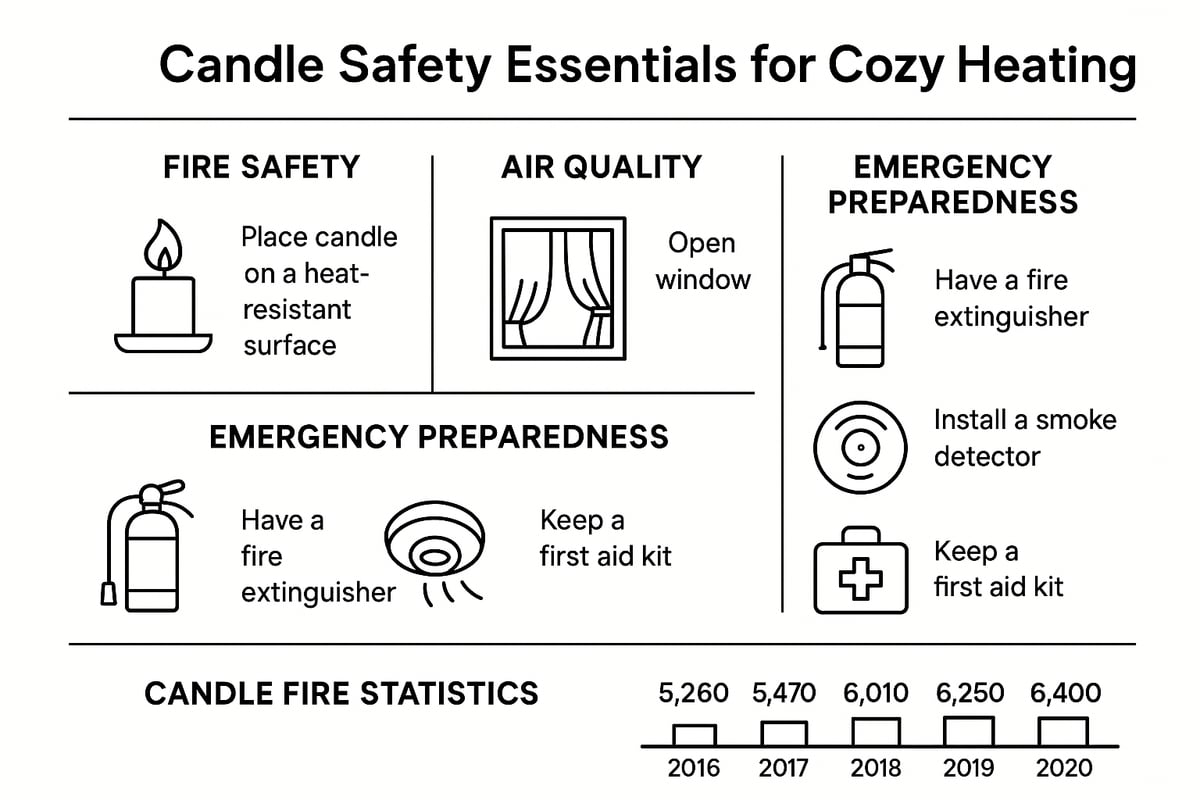
When using candles for warmth, fire safety is your top priority. Always keep burning candles within sight and extinguish them before leaving a room or going to sleep. Place candles on stable, heat-resistant surfaces, and make sure they are far from flammable objects like curtains, bedding, or paper.
Use sturdy candle holders or lanterns to prevent accidental tipping. Drafts from open windows or vents can cause uneven burning or tip candles over, so keep them away from airflow. Never use more candles for warmth than recommended—generally, no more than 10-12 in a 100-square-foot space.
According to Candle Fire Safety Statistics, candles cause approximately 7,400 home fires each year in North America. Most incidents result from unattended candles or improper placement. Responsible use is essential for anyone relying on candles for warmth.
Indoor Air Quality and Ventilation
Burning candles for warmth affects indoor air quality, especially in smaller rooms. Soot, carbon emissions, and lingering scents can build up if ventilation is poor. Choose low-soot, clean-burning candles for warmth, such as those made from soy or beeswax, to minimize indoor pollution.
To keep air fresh, crack a window slightly or run an air purifier during use. Scented candles can enhance ambiance, but be mindful of sensitivities or allergies. Use unscented or naturally scented options if air quality is a concern.
In apartments or compact spaces, avoid burning too many candles for warmth at once. Monitor the room for stuffiness or visible smoke, and adjust ventilation as needed. Prioritize your health while enjoying the cozy benefits of candles for warmth.
Emergency Preparedness
Even with care, accidents can happen when using candles for warmth. Equip your home with working smoke detectors, and test them regularly. Keep a fire extinguisher within easy reach in rooms where candles are used. Review fire escape plans with everyone in your household.
If a candle fire starts, act fast—smother the flame with a damp cloth or use a fire extinguisher. For minor burns, cool the area under running water and seek medical advice if needed. Having a well-stocked first aid kit nearby ensures you are prepared for any mishap.
By combining these safety measures, you can confidently use candles for warmth and create a cozy, secure retreat for winter nights.
Creative Ways to Maximize Candle Warmth and Comfort
When the temperature drops, candles for warmth can do more than just create ambiance. With thoughtful placement and creative setups, you can harness their heat efficiently while making your space inviting. Let’s explore how to get the most comfort and coziness from your candles for warmth.
Strategic Candle Placement
Getting the most from candles for warmth starts with smart arrangement. Grouping several candles together in the center of a room can help concentrate their heat. This is especially effective near seating areas, where people naturally gather.
- Use reflective surfaces like mirrors or metal trays beneath candles. This helps bounce both heat and light into the space.
- Arrange candles at different heights. Staggered placement increases air circulation and improves overall warmth.
- Place candles for warmth away from drafts and open windows. This prevents heat loss and reduces the risk of uneven burning.
In Scandinavian design, the concept of “hygge” often features clusters of candles for warmth and ambiance. Try recreating this by placing three to five pillar candles on a sturdy tray. Add glass or ceramic holders for stability and extra charm.
For small rooms, even a modest cluster can raise the temperature slightly. Always keep candles for warmth on heat-resistant surfaces, and never place them too close to flammable objects.
DIY Candle Warmers and Enhancements
If you want to boost the effect of candles for warmth, consider simple DIY enhancements. Ceramic or terracotta “candle heaters” are a popular choice. These setups use a flowerpot suspended above a group of tealight candles. The pot absorbs and radiates heat, gently warming the surrounding area.
- Build a “candle radiator” by stacking two terracotta pots with a metal bolt and washers for airflow.
- Place three to five tealights underneath for safe, steady heat.
- Always use heatproof bases and never leave DIY heaters unattended.
User experiments suggest these setups can slightly increase room temperature, especially in small, enclosed spaces. However, they are not a substitute for central heating. Safety is crucial when using candles for warmth in this way. For best practices and essential guidelines, review the Candle Safety Requirements and Recommendations.
DIY warmers are a fun project, but always monitor for excess heat, and ensure proper ventilation. Never use more candles for warmth than recommended for your space.
Combining Candles with Other Cozy Elements
Maximize comfort by pairing candles for warmth with other inviting touches. Soft blankets, plush throws, and warm beverages enhance the sensory experience. Scent layering is another way to elevate your cozy routine. Try combining candles for warmth in complementary fragrances, like vanilla and cinnamon, for a personalized atmosphere.
- Place candles for warmth on side tables next to your favorite chair.
- Layer rugs and cushions around candlelit areas for added insulation.
- Curate a cozy night-in routine: light candles for warmth, make herbal tea, and enjoy a good book or calming music.
Lifestyle blogs from 2025 highlight the trend of “comfort corners,” where candles for warmth are the focal point of relaxation zones. Whether you live in a spacious house or a compact apartment, blending candles for warmth with soft textures and soothing scents transforms any night into a cozy retreat.
Energy-Saving Strategies: Candles as Part of a Broader Cozy Living Plan
As energy costs rise, many seek creative ways to maintain comfort. Integrating candles for warmth into your home routine can offer a cozy, budget-friendly layer of heat when done thoughtfully. Use them as part of a broader plan, not a sole solution, to maximize both warmth and efficiency.
Integrating Candles into Home Heating Routines
Candles for warmth can be a practical supplement to traditional heating, especially during peak energy hours or mild winter evenings. Start by lighting a small group of candles in the living area where you spend most of your time. This approach gently raises the ambient temperature and creates a comforting glow.
Layering warmth is essential. Combine candles for warmth with extra clothing, thick socks, and cozy blankets. Place rugs on bare floors to reduce heat loss, and keep doors closed to trap warmth in occupied rooms. These strategies work together to lower your reliance on central heating, leading to potential savings.
Consider the average household heating costs in 2026. Using candles for warmth in conjunction with these methods can help reduce energy bills, especially if you use them during high-rate periods. Remember, always monitor the room’s temperature and never leave candles unattended.
Eco-Friendly and Cost-Effective Practices
For the best results, choose long-lasting, slow-burning candles for warmth, such as large soy or beeswax pillars. These types offer a steady heat output and minimize replacements, keeping costs down. Opt for unscented or clean-burning candles to maintain indoor air quality.
DIY candle-making is a budget-friendly option. By crafting your own candles for warmth, you control the ingredients and can reuse containers. Look for natural waxes and lead-free wicks. For more on choosing safe and effective candles, read The Science of Scent: Why Natural Isn't Always Safe.
Real-life testimonials show that combining candles for warmth with other energy-saving habits can trim monthly heating expenses. Burn candles only in occupied rooms and during hours when extra coziness is needed. This targeted use prevents waste and boosts efficiency.
When Not to Use Candles for Warmth
There are times when candles for warmth are not recommended. Avoid them in poorly ventilated spaces, or if you or your family have allergies, asthma, or sensitivities to scents. Pet owners should be cautious, as some candle ingredients can be harmful to animals.
Instead, consider alternatives like electric blankets, oil lamps, or portable heaters for consistent and safe warmth. Always prioritize safety and never exceed the recommended number of candles per room. For essential safety tips, watch this Candle Safety Tips Video before adding candles to your heating plan.
By understanding when and how to use candles for warmth, you can enjoy a cozy atmosphere without compromising safety or air quality.
Inspiring Candle Setups for Maximum Coziness in 2026
Imagine transforming your home into a sanctuary of comfort with carefully curated candles for warmth. As 2026 brings new trends in cozy living, the art of candle arrangement is evolving. Whether you are preparing for a festive gathering or a tranquil night in, the right setup can enhance both heat and ambiance.
Seasonal and Thematic Candle Arrangements
Seasonal displays play a central role in creating memorable moments with candles for warmth. In winter, cluster pine, cinnamon, and vanilla-scented candles as a table centerpiece. This not only radiates gentle heat but also evokes nostalgic comfort.
For holidays, blend tradition with modern style. Arrange blue and silver candles for Hanukkah, or opt for red and gold for Lunar New Year. Layering heights—using candle holders of varying sizes—ensures even heat distribution and visual interest.
Romantic evenings call for soft, rose-hued candles placed near seating areas. Meditation setups benefit from minimalist white candles, arranged in a circle to foster calm. Social media trends in 2026 highlight geometric groupings and mirrored trays, amplifying both warmth and light. With these setups, candles for warmth become the heart of seasonal celebration and relaxation.
Candles for Small Spaces and Apartments
Maximizing the effect of candles for warmth in smaller homes requires creative thinking. Wall sconces free up valuable surface space while reflecting light into the room. Hanging lanterns add vertical interest, perfect for apartments with limited floor area.
Window ledges serve as ideal spots for jar or tealight candles, safely contained and away from clutter. Multi-purpose candle holders that double as storage offer a practical touch for micro-apartments. Grouping several candles together near main seating areas can noticeably increase comfort.
Urban dwellers in 2026 often share hacks for enhancing warmth in compact spaces. For instance, using reflective trays behind candles boosts both the perceived brightness and the actual heat. These strategies prove that even in the smallest settings, candles for warmth can make a significant difference.
Candle Gifting and Sharing Warmth
Sharing candles for warmth is more than a gesture—it is an experience. Gifting a thoughtfully chosen candle for a birthday, housewarming, or care package spreads comfort and light. In 2025 and 2026, personalized candle gifts with custom scents and handwritten notes have taken center stage.
Luxury brands offer gift-ready packaging, complete with matches and scent samples, making the act of giving even more special. According to market statistics, the candle gifting sector has seen impressive growth, as more people seek to share warmth with loved ones. For curated inspiration, explore the Verba Gift Guide 2025, which features unique gifting ideas and cozy arrangements.
Whether you are sending comfort across the miles or brightening a neighbor’s evening, candles for warmth remain a timeless gift.
The Role of Scent in Creating a Cozy Ambiance
Scent is a powerful element in the pursuit of coziness with candles for warmth. Fragrance can transform the mood of a room, inviting relaxation or celebration. In 2026, top cozy scents include cashmere, sandalwood, and spiced chai, favored for their soothing profiles.
Layering complementary scents—such as vanilla with cedar or amber with lavender—creates a signature home atmosphere. This approach not only enhances comfort but also ties the sensory experience together. Influencers recommend rotating scents with the seasons to keep the ambiance fresh.
When selecting candles for warmth, consider unscented options for sensitive spaces or blend mild and bold fragrances for a balanced effect. The right scent can elevate simple candlelight into a multi-sensory retreat.
Verba: Luxury Scented Candles for Cozy, Safe Warmth
Verba’s premium collections redefine candles for warmth, offering both style and safety. Each candle features coconut-apricot wax for a clean burn, complemented by wooden wicks that provide a gentle crackle.

Gift-ready packaging includes signature matches and mini scent samples, perfect for any occasion. Customer testimonials praise the long-lasting warmth and sophisticated aromas, noting how Verba candles transform ordinary nights into memorable experiences. The elegant vessel designs fit seamlessly into modern, rustic, or minimalist interiors.
For those seeking a blend of warmth, safety, and luxury in 2026, Verba candles stand out as a top choice. Their commitment to clean ingredients and innovative presentation makes every moment with candles for warmth truly special.
If you are choosing a scent for the cold months rather than the setup, our guide to strong fall candle scents covers which compositions actually hold a closed room.


Leave a comment
This site is protected by hCaptcha and the hCaptcha Privacy Policy and Terms of Service apply.