

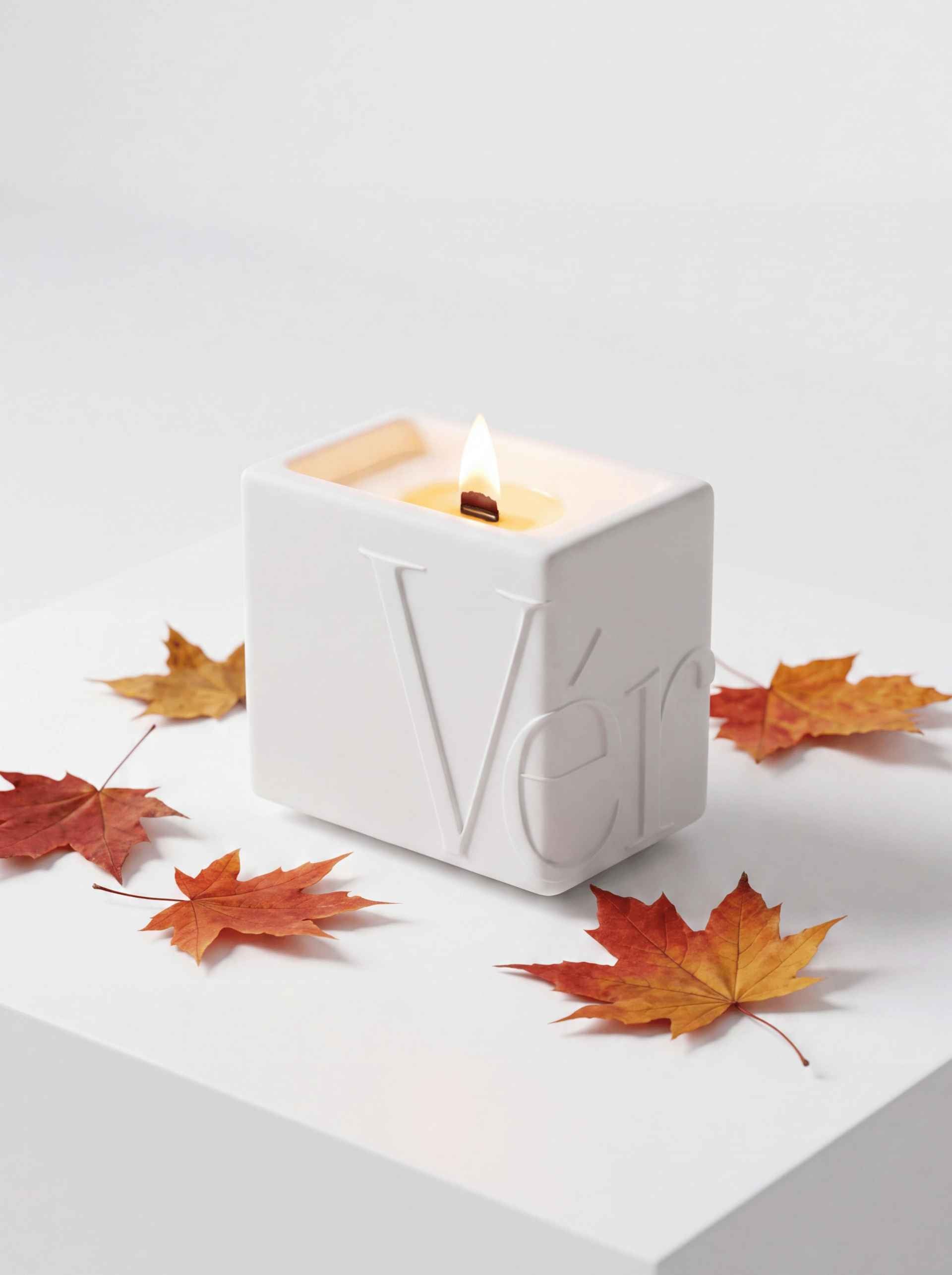
Strong Fall Candle Scents: Autumn Beyond Pumpkin Spice
Every September, the same thing happens. The shelves turn orange. Pumpkin spice arrives in a font that shouts. And by the second week of October, half of those candles are burning in a room where nobody can smell them anymore.
There is another version of fall. The light goes amber at four in the afternoon, the windows close for the first time since May, and the air in a room finally holds a scent instead of losing it out the screen door.
This is the season intense candles were made for. Not the ones that hint. The ones that arrive.
The problem was never sweetness
Let's be clear about what is actually wrong with the shelf.
It is not that pumpkin spice is sweet. Sweet is fine. Sweet is most of what autumn smells like — caramel, praline, warm milk, sugar meeting heat. The problem is dilution.
Mass-market candles are formulated to a price. The fragrance load is low, the wax is cheap, and what you get is a scent that announces itself for the first ten minutes and then disappears into the furniture. You stop smelling it. Guests never smelled it at all. By the fourth burn you are lighting a jar out of habit.
A fully loaded candle does the opposite. It keeps working at hour three. It is still there when you walk back into the room. It is, occasionally, too much — and knowing that is part of using it well.
Cold season is when intense candles finally make sense
From May to September, windows are open and air moves. Anything you light gets diluted twice — once in the formula, once by the outdoors.
From October, that stops. The room closes. Whatever you burn stays with you for the whole evening, and a candle that felt appropriately strong in July suddenly reads correctly for the first time. This is why heavy compositions — smoke, resin, spice, tobacco — belong to autumn and winter. Not tradition. Physics.
It also means the question changes. In summer you ask what does it smell like. In October you ask what is in it, because you are breathing it for four hours with the windows shut.
Every Vérba candle is poured with a coconut–apricot wax blend with no soy fillers, lit by an FSC-certified wooden wick rather than cotton. Coconut–apricot burns cooler and holds a higher fragrance load without throwing soot — which is the whole reason we can pour them this concentrated. More on that in our candle wax guide.
What actually makes a scent read as autumn
Strip away the branding and autumn is three things.
Spice. Cinnamon, clove, nutmeg, cardamom. The warmth comes from heat, not only from sugar.
Smoke and resin. Tobacco, oud, amber, labdanum. These are the notes that make a room feel enclosed rather than open. They read as evening.
Wood. Cedarwood, sandalwood, driftwood, vetiver. The grounding underneath everything else — the reason a scent feels like a room and not a perfume.
Sweetness runs through all of it. Vanilla, tonka, caramel, praline. The difference between a good autumn candle and a cheap one is not how sweet it is — it is whether there is anything underneath the sugar.
Six autumn candle scents that are not pumpkin spice
The strongest one — Cinnamon Hug

Cinnamon — warming. Vanilla bean — uplifting. Spiced oat milk — indulgent. Caramel — decadent. Praline — toasty.
It smells like a cinnamon bun. Not a suggestion of one — the thing itself, still warm, sugar setting on top. There is no point pretending otherwise, and no reason to.
What separates it from every mass-market version of the same idea is concentration. This is the most intense candle we pour. Light it in a small room and you will know within minutes. Light it in an open kitchen and it will still be there when you come back an hour later. Once the room has filled, you can put the flame out and the scent will stay with you for hours — that is not a flaw, that is what a fully loaded fragrance does.
Our best seller, and the one people repurchase without thinking about it.
Best for: the week the heating goes on. Kitchens, hallways, the room everyone walks through.
One caution — if you prefer scent in the background, start with Soft Bound or Cozy Neroli. Cinnamon Hug does not do background.
For evenings that go long — Sweet Tobacco
Tobacco — focusing. Vanilla bean — uplifting. Caramel — decadent. Amber — enchanting. Cinnamon — warming. Sandalwood — inspiring.
Tobacco is the most misunderstood note in home fragrance. It does not smell like smoking. It smells like a leather chair in a room with books in it — dry, sweet at the edges, faintly resinous. The sandalwood underneath gives it somewhere to land.
Best for: after eight in the evening. Studies, dining rooms, anywhere a conversation lasts.
For the dark end of October — Oud Péché
Smoked oud — alluring. Cinnamon — warming. Cardamom — harmonizing. Nutmeg — focusing. Clove — reassuring. Patchouli — sensual.
The most uncompromising scent in the collection, and the most autumn. Smoke and spice, with no vanilla to soften the landing. If pumpkin spice is a costume, this is the actual weather.
Best for: late October. Bedrooms. Nights when you are not expecting anyone.
For a room that should feel expensive — Unleashed Saffron
Saffron — mood-boosting. Amber — enticing. Cedarwood — restorative. Tonka — balancing. Oud — alluring.
Saffron is the golden-hour note: warm without heat, rich without weight. The cedarwood grounds it, the tonka rounds the edges, and the whole thing sits at the exact temperature of a room lit by one lamp.
Best for: living rooms. The hours between coming home and deciding to cook.
For the softer side of the season — Soft Bound
Leather — sensual. Labdanum — deepening. Cotton spun — softening. Amber — enchanting. Driftwood — grounding. Green tea — clarifying. Lemongrass — energizing.
Leather and cotton is an unusual pairing, and it is the point — structure wrapped in something yielding. The green tea and lemongrass keep it lighter than the rest of this list, which makes it the right choice for early fall, when the days are still warm and only the evenings have turned.
Best for: September. Bedrooms and reading corners.
For the shoulder weeks — Cozy Neroli
Neroli — anti-stress. Yuzu blossom — balancing. Bamboo — calming. Coconut — joy.
Not an autumn scent, and included deliberately. Some rooms — a bright kitchen, a morning workspace — resist going dark with the calendar. Neroli and yuzu keep those rooms in a different season entirely, which is its own kind of luxury when the sun sets at 4:40.
Best for: mornings. North-facing rooms. Anyone who is not ready.
How to burn a concentrated candle
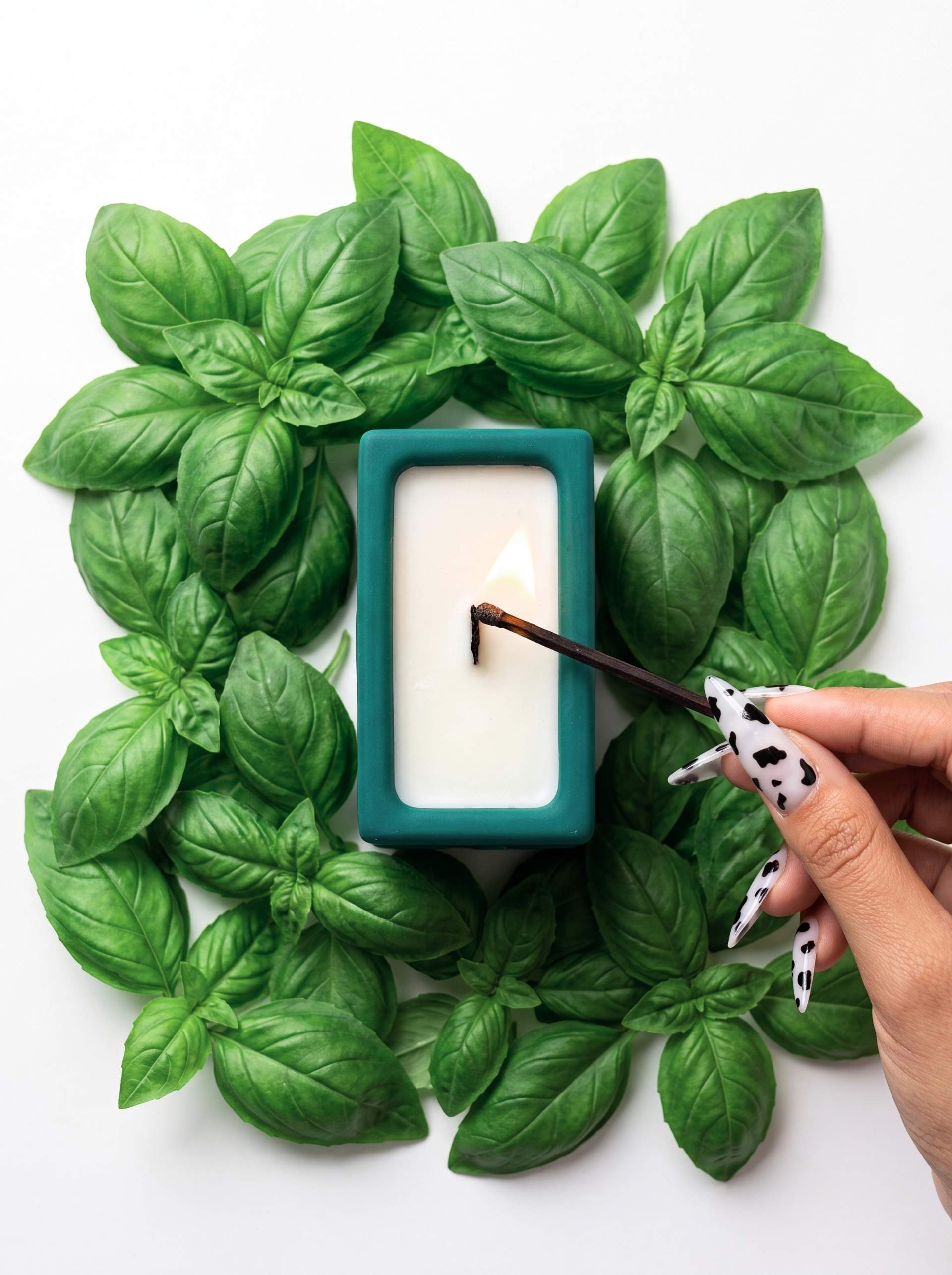
The first burn is the one that matters. Wax has a memory. The first time you light it, leave it burning until the melted pool reaches the wall of the vessel all the way around. Stop before that and the candle will tunnel for the rest of its life, burning a narrow well down the middle and wasting most of what you paid for. Do not rush this one.
After that, you do not need to keep it lit. A concentrated candle keeps working long after the flame is out. Light it, let the room fill, then put it out — the scent stays for hours. That is your volume control, and it is why one candle lasts a whole season.
Trim the wood to 3–4 mm. A wooden wick that is too long will not stay lit. Pinch off the carbon with your fingers when the candle is cold — no trimmer needed.
One candle per room, not three. Layering scents is the fastest way to make a home smell cheap. Depth comes from one composition doing its work, not three competing.
Match the size to the room. A 5.5 oz candle is built for spaces under 90 sq ft. In a larger open-plan room, it will be a background note rather than an atmosphere.
More on this in our guide to caring for wooden wick candles.
Autumn, without the costume
The season does not need a mascot. It needs a room that feels closed, warm, and deliberate — and one scent good enough to live with until the snow arrives.
Two sides. One home. Let scent decide.
Every Vérba candle is hand-poured in Toronto with coconut–apricot wax and an FSC-certified wooden wick. Up to 55 hours of burn. Explore all candles — or start with the Discovery Set and let your senses choose.
Frequently asked questions
What are the best fall candle scents that aren't pumpkin spice?
Tobacco, smoked oud, saffron, cinnamon, sandalwood, amber and clove all read as autumn without relying on the pumpkin accord. Look for compositions where spice and wood sit underneath the sweetness rather than sugar standing on its own.
Are Vérba candles strongly scented?
Yes. They are poured with a high fragrance load in coconut–apricot wax, which holds concentration without sooting. Cinnamon Hug is the most intense in the collection. In a room under 90 sq ft you rarely need to keep one burning for long — once the room has filled, put the flame out and the scent will stay for hours.
Why do candles smell stronger indoors in autumn?
From October onward, windows stay closed and air stops circulating. The same candle that read as subtle in summer will fill a room in autumn — which is also why wax and wick quality matter more in the colder months.
How long does a fall candle last?
A 5.5 oz coconut–apricot wax candle burns up to 55 hours — roughly the length of one autumn if you light it a few evenings a week.


Leave a comment
This site is protected by hCaptcha and the hCaptcha Privacy Policy and Terms of Service apply.