

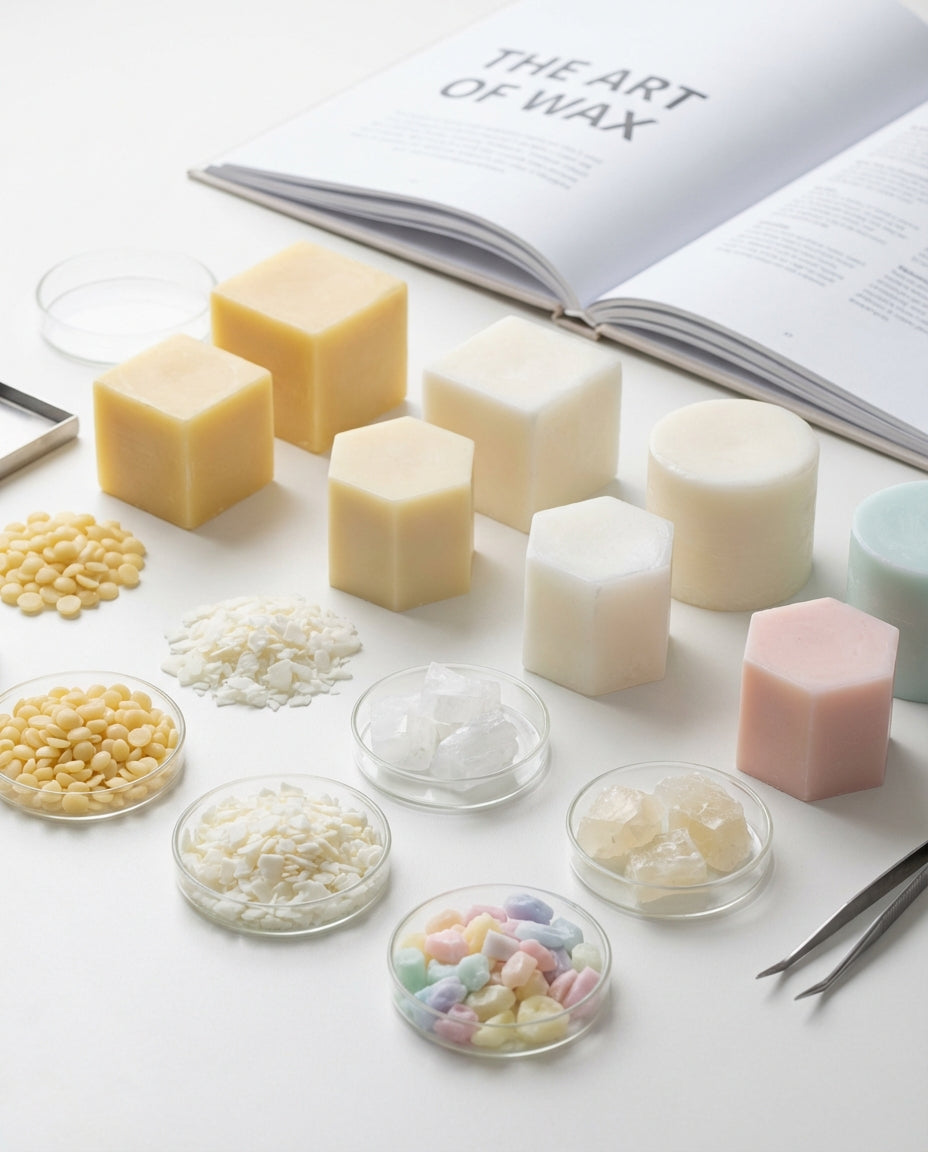
Coconut Apricot Wax vs Soy, Coconut & Paraffin | Candle Wax Guide
Finding the Ideal Balance Between Scent Performance, Clean Burn, and Aesthetic Longevity
Introduction: Why Wax Choice Matters More Than Scent
When choosing a scented candle, most people focus on fragrance notes or design.
In reality, wax is the foundation of everything.
Wax determines:
-
how a candle smells
-
how evenly it burns
-
how it looks after the first use
-
how it affects the air in your home
Modern consumers want more than just strong scent. They want candles that feel clean, comfortable, visually refined, and safe for everyday use — especially in enclosed spaces and homes with pets.
This article provides a deep, comparative analysis of the most common waxes used in container candles — paraffin, soy wax, coconut wax, and blended waxes — and explains why coconut–apricot wax has become the optimal choice for modern niche candles.
What Defines a High-Quality Candle Wax?
To compare waxes fairly, we need clear criteria. A truly high-quality candle wax must balance three essential factors.
1. Scent Performance
-
Ability to hold fragrance oil
-
Efficient scent release when lit (hot throw)
-
Noticeable aroma even when unlit (cold throw)
2. Visual Aesthetics
-
Smooth surface after cooling
-
Clean appearance after the first burn
-
Minimal cracking, frosting, or surface distortion
3. Clean & Stable Burn
-
Minimal soot and airborne particles
-
Controlled melt pool
-
Predictable burn rate and longevity
No wax that excels in only one category can deliver a truly premium experience.
How Wax Influences Fragrance and Air Quality
Wax is not just fuel — it is a carrier and diffusion system for fragrance molecules.
As a candle burns, wax controls:
-
how fragrance evaporates
-
how quickly scent fills a room
-
what byproducts are released into the air
This is why two candles with the same fragrance can feel completely different depending on the wax used.
Paraffin Wax: Why Mass-Market (and Some Luxury) Brands Still Use It
Paraffin wax remains the most widely used wax in the candle industry.
Why Paraffin Is So Popular
Paraffin is favored because it offers:
-
extremely strong scent throw
-
rapid fragrance release
-
smooth, glossy appearance
-
predictable and easy manufacturing
This is why mass-market candles often feel immediately powerful — they are designed to scent large spaces quickly.
Even some luxury brands continue to use paraffin for one reason: olfactory impact.
The Hidden Downsides of Paraffin Wax
While paraffin performs well aromatically, it comes with important trade-offs.
1. Combustion Byproducts
Paraffin is derived from petroleum. During real-world burning (which is rarely perfectly efficient), it may release:
-
ultrafine soot particles
-
volatile organic compounds (VOCs)
-
aldehydes formed during incomplete combustion
Even at low concentrations, these byproducts can make indoor air feel heavy or irritating, especially in enclosed spaces.
2. Headaches, Nausea, and Sensory Discomfort
Many people report symptoms such as:
-
headaches
-
nausea
-
dizziness
-
throat irritation
These reactions are not caused by fragrance alone, but by a combination of aggressive scent release and combustion byproducts, which can overwhelm sensitive nervous systems.
This is often described as a “chemical” or “gasoline-like” undertone, even when the fragrance itself is expensive.
3. Homes with Pets — Especially Cats
Cats have highly sensitive respiratory systems and limited ability to process airborne toxins. Paraffin candles can:
-
increase airborne particulates
-
release fragrance too quickly for animals to tolerate
-
contribute to respiratory or behavioral discomfort over time
For this reason, paraffin-heavy candles are not recommended for frequent use in homes with pets, particularly cats.
Is It Safe to Burn Candles in Homes with Pets?
Soy Wax: Natural, Clean — but Visually Unstable
Soy wax became popular as a plant-based alternative to paraffin.
Benefits of Soy Wax
-
Renewable and biodegradable
-
Clean-burning with proper wicking
-
Affordable and widely available
The Reality of Soy Wax Performance
Despite its eco-friendly image, soy wax has inherent limitations.
Visual Instability
Soy wax is polymorphic, meaning it crystallizes unpredictably. This causes:
-
frosting (white crystal patterns)
-
surface cracking
-
uneven texture after cooling
Even a perfectly poured soy candle often looks rough after the first burn.
Moderate Scent Performance
Soy wax tends to hold fragrance tightly, resulting in:
-
softer hot throw
-
weaker ambient scent when unlit
Coconut Wax: Beautiful Aroma, Structural Limitations
Coconut wax is prized for its sensory qualities.
Strengths of Coconut Wax
-
Excellent fragrance diffusion
-
Strong cold throw
-
Creamy, elegant texture
-
Very clean burn
Why Pure Coconut Wax Falls Short
Pure coconut wax is extremely soft.
This leads to:
-
faster burn time
-
reduced structural stability
-
deformation in warm environments
On its own, coconut wax lacks the durability required for long-lasting container candles.
Why Blended Waxes Exist
No single wax can deliver perfect performance.
Blended waxes are designed to:
-
stabilize structure
-
enhance scent diffusion
-
improve burn consistency
-
maintain visual integrity
Among modern blends, coconut–apricot wax offers the most complete balance.
Coconut–Apricot Wax: The Ideal Modern Wax Matrix
Coconut–apricot wax combines the aromatic performance of coconut wax with the structural stability of apricot wax.
Why This Blend Works
Apricot wax adds:
-
higher melting resistance
-
smoother recrystallization
-
improved post-burn reset
-
longer burn time
Together, the blend delivers consistent performance across all key metrics.
Performance Comparison Summary
Scent Performance
-
Strong, room-filling aroma
-
Layered, smooth diffusion
-
Noticeable scent even when unlit
Visual Aesthetics
-
Smooth, porcelain-like surface
-
Minimal cracking or frosting
-
Candle looks refined even after repeated burns
Burn Quality
-
Controlled melt pool
-
Cleaner burn than paraffin-heavy candles
-
Longer burn time than pure coconut wax
Why Coconut–Apricot Wax Smells Even When Not Lit
This effect is not due to higher fragrance load.
It occurs because:
-
the wax allows slow molecular diffusion
-
fragrance evaporates gently at room temperature
-
scent presence remains soft and continuous
Aesthetic Longevity: Why It Matters in Premium Candles
A candle should remain beautiful throughout its life.
Coconut–apricot wax:
-
cools back to a smooth surface
-
avoids cratered textures
-
maintains a clean, intentional look
This is especially important for:
-
open-shelf styling
-
minimalist interiors
Clean Burn & Everyday Comfort
Modern candles are used daily — not occasionally.
Coconut–apricot wax:
-
produces minimal soot
-
releases scent gradually
-
creates a lighter indoor air experience
This makes it better suited for:
-
long burn sessions
-
smaller spaces
-
homes with pets or scent-sensitive individuals
Final Verdict: The Best Wax for Modern Niche Candles
Each wax serves a purpose:
-
Paraffin prioritizes scent intensity
-
Soy wax prioritizes natural sourcing
-
Coconut wax prioritizes aroma elegance
But only coconut–apricot wax delivers balance.
It combines:
-
paraffin-level scent performance
-
plant-based refinement
-
superior visual stability
-
cleaner, more comfortable burn
Discovery Set — Spin · Pick · Burn
Conclusion
The future of candles is not about extremes.
It is about balance — between scent and air quality, beauty and performance, impact and longevity.
Coconut–apricot wax represents that balance.
And once experienced, it redefines what a candle should feel like.
FAQ:
Is coconut-apricot wax better than soy wax for candles?
Coconut-apricot wax offers a smoother appearance, stronger scent diffusion, and a more stable surface after burning compared to traditional soy wax. Soy wax is natural, but it often develops frosting, surface cracks, and uneven tops over time.
Why do paraffin candles sometimes cause headaches or discomfort?
Some people experience headaches or nausea when burning paraffin candles due to byproducts of combustion, such as airborne particles and volatile compounds. These reactions vary by individual sensitivity, room ventilation, and burn conditions.
Which candle wax burns the cleanest?
Coconut-based waxes are widely considered among the cleanest-burning options. They tend to produce less visible soot and fewer airborne particles compared to paraffin, especially when paired with proper wick selection.
Is coconut-apricot wax safe for homes with pets?
Coconut-apricot wax is often preferred in pet-friendly homes because it burns cleaner and produces fewer irritants in the air. As with any candle, proper use and ventilation are essential, especially around animals.
Why does coconut-apricot wax smell stronger even when the candle isn’t lit?
Coconut-apricot wax has excellent fragrance retention and release properties. This allows the scent to remain noticeable at room temperature, creating a soft ambient aroma even without an active flame.
Does coconut-apricot wax burn longer than other waxes?
Yes. Due to its balanced melting point and efficient fuel consumption, coconut-apricot wax typically burns longer and more evenly than pure coconut wax and many paraffin blends.
Wax is only half the answer. For how fragrance load behaves once the windows close, see our guide to strong fall candle scents.



1 comment
I found this very interesting. Especially knowing coconut apricot burn longer with a good hot throw
Kay Grammas
Leave a comment
This site is protected by hCaptcha and the hCaptcha Privacy Policy and Terms of Service apply.