

Article: The Good One
The Good One
There is something in your home right now that you are not using.
You know exactly what it is. The good glasses at the back of the cupboard. The coat that’s too nice for the grocery store. A bottle someone brought that you moved twice without opening. A candle, still wrapped, on the shelf where you can see it and not touch it.
You are not being careless. You are being careful. That is the whole problem.
The occasion is not coming
Saving something has a logic to it, and the logic sounds responsible. I’ll use it when there’s a reason. When the house is tidier. When the week calms down. When someone comes.
But notice what that sentence actually does. It takes something that already belongs to you and makes it conditional. It says: this is not for a Tuesday. This is not for me alone. This is for a better version of the evening, and a better version of me, and neither has arrived yet.
So it waits. And you wait with it.
Here is the part nobody says out loud: the occasion is not coming. Not because your life is small — because occasions are not found, they’re declared. Nobody is going to knock on the door and tell you that tonight qualifies. The dinner party that would have justified the good glasses gets postponed. The guests who were coming cancel. And the thing on the shelf keeps its wrapper on, quietly losing the only thing it was ever for.
Nothing on a shelf is being preserved. It’s being postponed.

The same mechanism, turned inward
There’s a version of this that people take more seriously, and it’s the same thing pointed at yourself.
We’ve agreed to call it burnout, and we treat it like weather — something that happens to you, something you recover from with a weekend. But burnout is rarely a shortage of energy. It’s energy pointed somewhere you didn’t choose. You’ve been the thing that burns so everything else can keep running: the job, the group chat, the family calendar, the person who needed you to be fine this week.
Nobody hands you a medal for running on empty. They hand you Monday.
And the fix isn’t to stop burning. You’re not going to stop. The fix is to point some of it at something you actually picked.
Ten minutes, and nothing required of you
That’s a smaller act than it sounds like. It is not a life change.
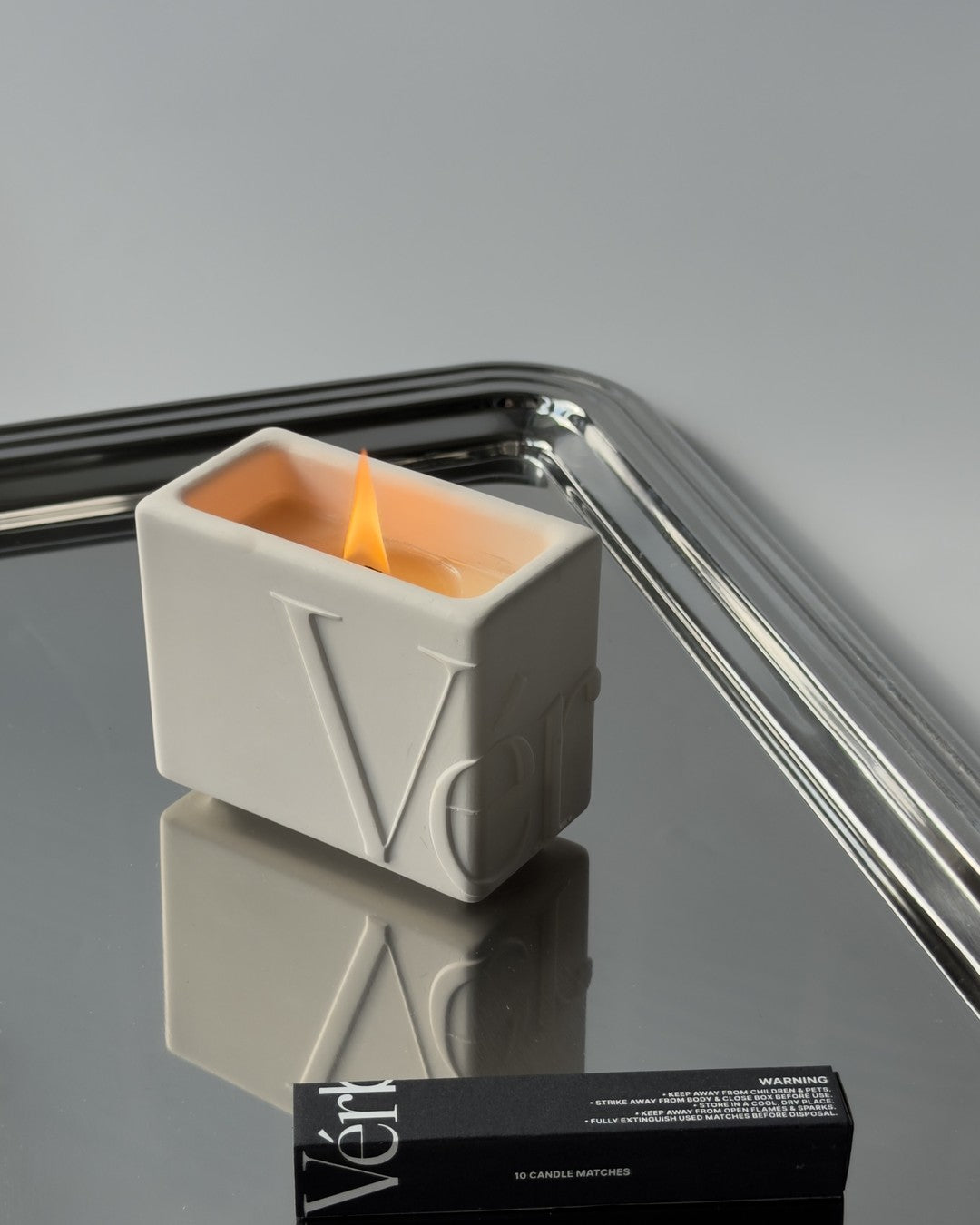
You close the door. You put the phone face down. You light the thing you’ve been saving, and for the length of one match the room is different — warmer at the edges, quieter, smaller in a way that feels like relief rather than confinement. The wooden wick makes a sound like a fireplace three rooms away. And then you sit in it, and nothing is required of you.
That’s it. That’s the whole ritual. There is no correct way to do it and no one checking.

Why a candle, honestly
We make our candles in Toronto, by hand, in small batches. Every scent was built here — tested, rejected, rebuilt, tested again. Hundreds of materials were tried; a very small number made it in. Coconut–apricot wax blend, no soy fillers, an FSC-certified wooden wick.
But the honest reason a candle is worth anything has nothing to do with how it was made. It’s that it gives you a defensible reason to stop. A flame is a boundary you can point at. Something is burning; I am not available.
So
The good glasses, tonight, with whatever you’re actually drinking. The coat, to the grocery store. The candle, unwrapped, on a Tuesday, for an audience of one.
Not because you’ve earned it. Because earning it was never the arrangement.
Nothing in this house is too good for you.
Her rules.


Leave a comment
This site is protected by hCaptcha and the hCaptcha Privacy Policy and Terms of Service apply.