

What "Made in Canada" Really Means on a Candle Label
Turn over almost any candle sold as Canadian and you will find the same three words: hand-poured in Canada.
It is a true statement. It is also, in most cases, the only part of the candle that happened here.
This is not an accusation. The wording is standard, legal, and used in good faith by people who work hard. But it describes one step in a process that has several, and it is worth knowing which step it describes.
A candle is four things
Strip it down and there is not much to a candle. A vessel. Wax. A wick. A fragrance. Every brand assembles those four, and where each one comes from is a separate question with a separate answer.
The industry norm looks roughly like this. The vessel arrives from overseas in a shipping container, usually glass, usually from a catalogue that a hundred other brands are also ordering from. The wax arrives in slabs. The wick arrives in a box. The fragrance arrives finished, in a drum. Someone in Canada melts, pours, labels, and cures.
That last part is real work and it takes real skill. Pour temperature, cure time, fragrance load — get any of them wrong and the candle tunnels, sweats, or throws nothing. But it is assembly. And hand-poured in Canada covers assembly without saying anything about the other three.
What we make in Toronto
The vessel
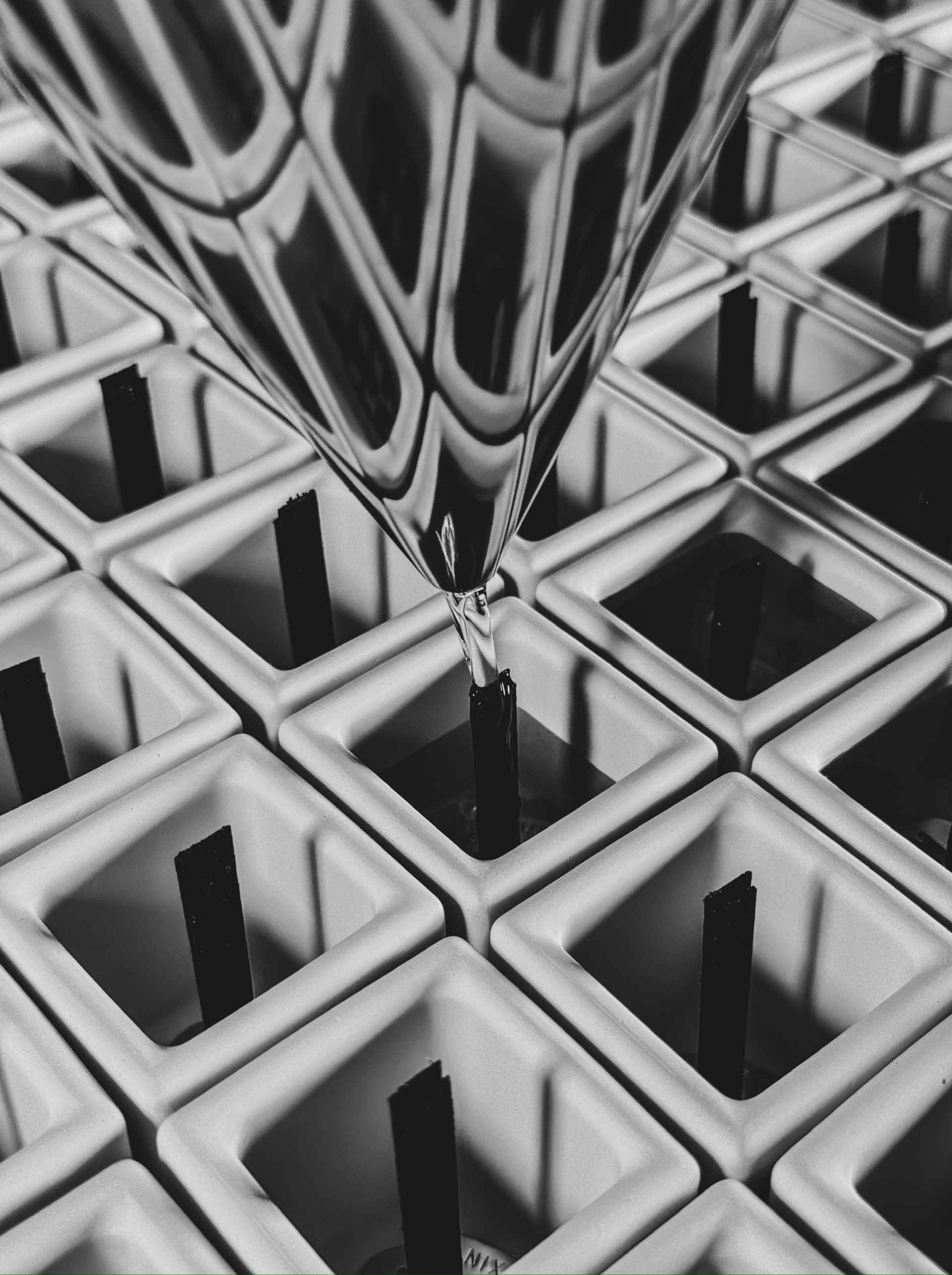
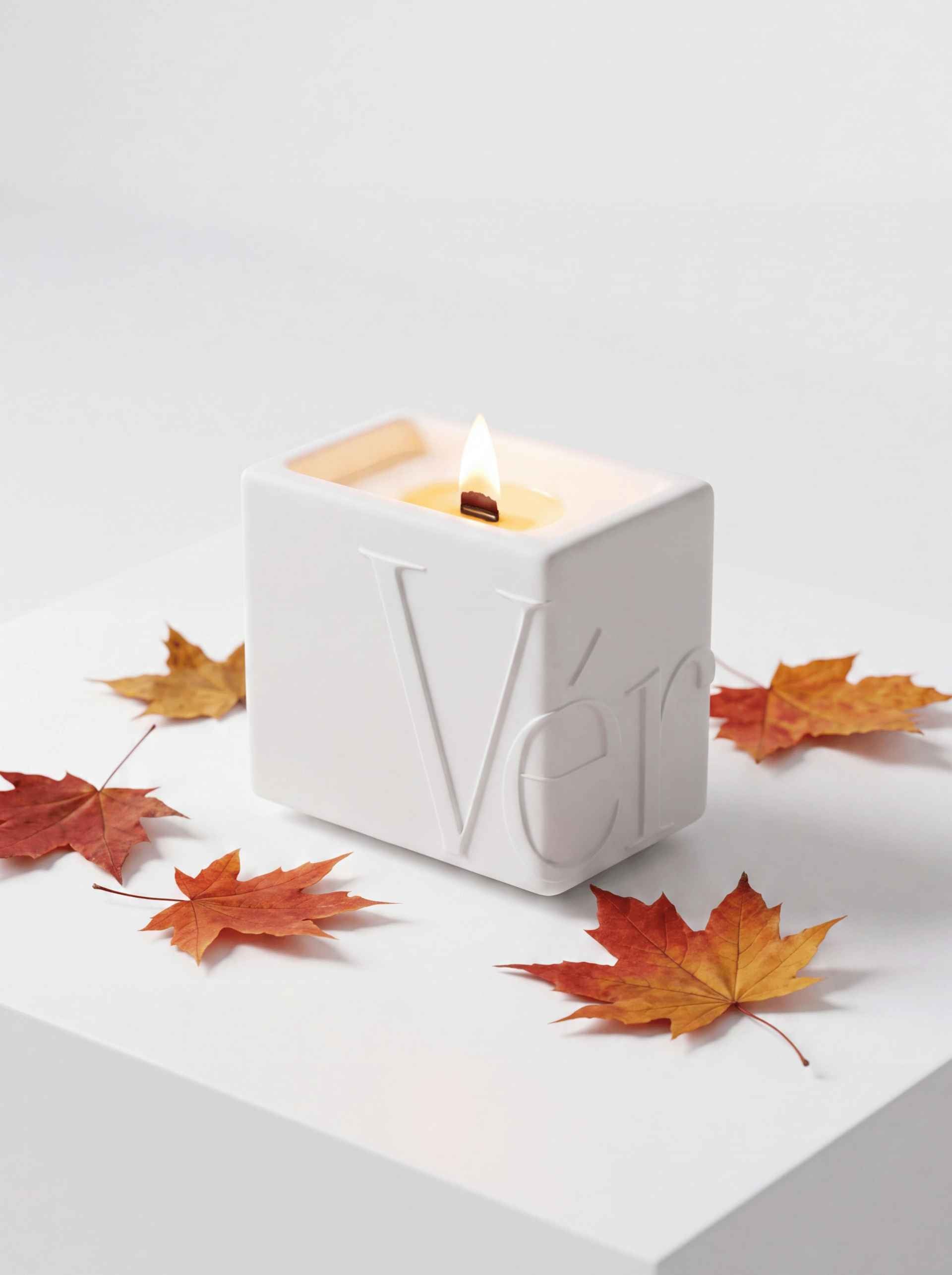
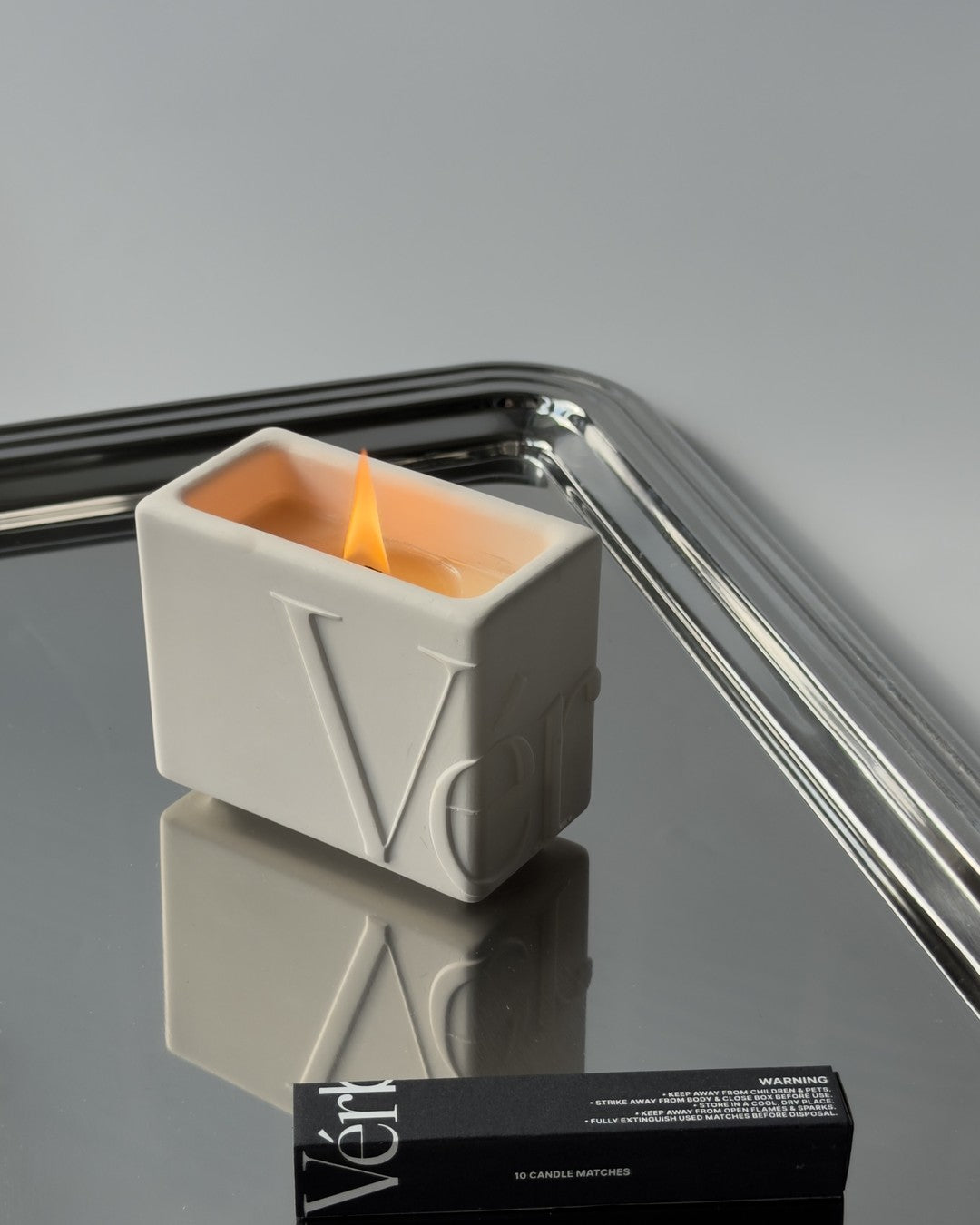
Our vessels are not ordered. They are cast by hand, one at a time, in our Toronto studio. The sculpted rectangular form, the soft matte surface, the wordmark debossed into three faces — none of that exists in a supplier catalogue, because it was made for this brand and it is made here.
Casting is slow. Each vessel has to set, release and finish before it can be filled, and a proportion of them never make it that far. That is the trade. It is also why two Vérba candles are never quite identical.
The fragrance
This is the part people assume is bought — and for almost every candle on the shelf, it is bought whole.
The industry model is simple. A fragrance house sells a finished oil. A brand picks one from a catalogue, orders a drum, and pours it exactly as it arrived. Nothing is changed. It is efficient and entirely legitimate, and it is why so many candles in a given season smell like cousins — several brands are quietly pouring the same oil into different jars.
Nothing goes into a Vérba candle the way it came in.
Each scent is built here from multiple components — raw perfumery materials alongside fragrance bases developed for candle use — weighed, combined and adjusted over rounds of testing until the accord is ours. A chef does not press the olive oil. A chef decides what the dish is.
Then the slow part, which is specific to candles. A composition that reads beautifully on a blotter routinely collapses in hot wax, because wax is not skin and heat is not air. So it gets poured, burned, corrected, and burned again — until the accord holds steady through fifty-five hours rather than only in the first ten minutes.
What ends up in the candle is a formula that exists nowhere else and cannot be ordered from a catalogue.
The pour
A coconut–apricot wax blend with no soy fillers, poured by hand in the same studio, in batches small enough that each one is checked rather than sampled. We use it because it burns cooler and carries a higher fragrance load without sooting — which is what makes a composition this concentrated possible in the first place. More on that in our candle wax guide.

What we don't make here
Here is where most brand stories go quiet. Ours will not.
The components come from around the world. Aroma molecules, naturals and fragrance bases arrive from France, the United States, Canada, elsewhere in Europe, and New Zealand. That is true of every perfumer alive — oud does not grow in Ontario, and nobody serious pretends otherwise. Sourcing globally is not the compromise. It is the job.
What matters is who decides the proportions. That decision is made here, by hand, over months.
The wax and the wick are sourced, not manufactured by us. The wooden wicks are FSC-certified — traceable to responsibly managed forest — which is a certification, not a country of origin, and we do not claim otherwise.
So: the vessel, the formula and the pour are ours and happen in Toronto. The components come from the people who produce them best, wherever they are. That is the honest version, and it is a stronger position than a flag on a label.
Made in Toronto, delivered in Toronto
One practical advantage of making things where you live: if you are in Toronto, your candle does not travel. We offer same-day and next-day delivery across Toronto — composed in the city, poured in the city, delivered in the city, with no courier network in between.
For a gift that was remembered late, that is the difference between arriving and not arriving.
How a small brand can do this at all
The usual reason brands outsource is scale. Casting your own vessels and building your own formulas does not work at ten thousand units a month, which is why nobody doing ten thousand units a month does it.
We launched in 2025 and we are deliberately small. Limited editions run to twenty numbered candles. Batches are small enough to check by hand. That is not a growth strategy anyone would recommend, but it is the only way the object comes out the way it was drawn — and if it stops being possible at some size, we would rather stay under that size.
Four questions worth asking any candle
Whether or not you buy from us:
Where was the vessel made? If a brand made it, they will say so, because it is expensive and they want the credit. Silence usually means a catalogue.
Does the brand compose its scents, or pour them as supplied? Most pour a single finished oil, unchanged. There is nothing wrong with that — but it is why so many candles smell alike, and it is worth knowing which one you are paying for.
What kind of wax, specifically? “Natural wax blend” can mean almost anything. A brand that names its wax is telling you more than one that does not.
Cotton or wood wick — and is the wood certified?
A brand that answers all four is telling you what you are buying. A brand that answers none is selling you three words on a sticker.
Two sides. One home.
Vérba is a Toronto candle brand: vessels cast by hand in our studio, fragrances built in-house rather than poured as supplied, coconut–apricot wax, FSC-certified black wooden wicks. Up to fifty-five hours of burn.
Explore all candles, or start with the Discovery Set and let your senses choose.
Frequently asked questions
Are Vérba candles made in Canada?
Yes. The vessels are cast by hand, the fragrances are composed, and the candles are poured in our Toronto studio. The fragrance components are sourced internationally, as they are for every perfumer — but the formulas are ours and are built here.
What is the difference between “hand-poured in Canada” and “made in Canada”?
Hand-poured describes the assembly step: melting wax and filling a vessel. It says nothing about where the vessel, wax, wick or fragrance came from. Most candles sold as Canadian are poured here from components — including finished fragrance oils — made elsewhere.
Do you create your own fragrances?
Yes. We do not pour a fragrance the way it arrives from a supplier. Each Vérba scent is composed in our studio from multiple components — raw perfumery materials and fragrance bases developed for candle use — then tested in wax over several rounds, because a composition behaves differently burning than it does on a blotter.
Where can I buy Canadian-made luxury candles in Toronto?
Vérba candles are made in Toronto and available online at verba-store.com, with same-day and next-day delivery within Toronto.
What are Vérba candle vessels made of?
A cast mineral composite with a soft matte finish, made in our studio rather than ordered from a supplier.
How long do Vérba candles burn?
Up to 55 hours for the 5.5 oz size, which suits rooms under 90 sq ft. The 14 oz size is built for medium to large spaces.

Laisser un commentaire
Ce site est protégé par hCaptcha, et la Politique de confidentialité et les Conditions de service de hCaptcha s’appliquent.